


How to Choose the Right Guitar Strings: A Beginner’s Guide to Gauge, Material & Tone
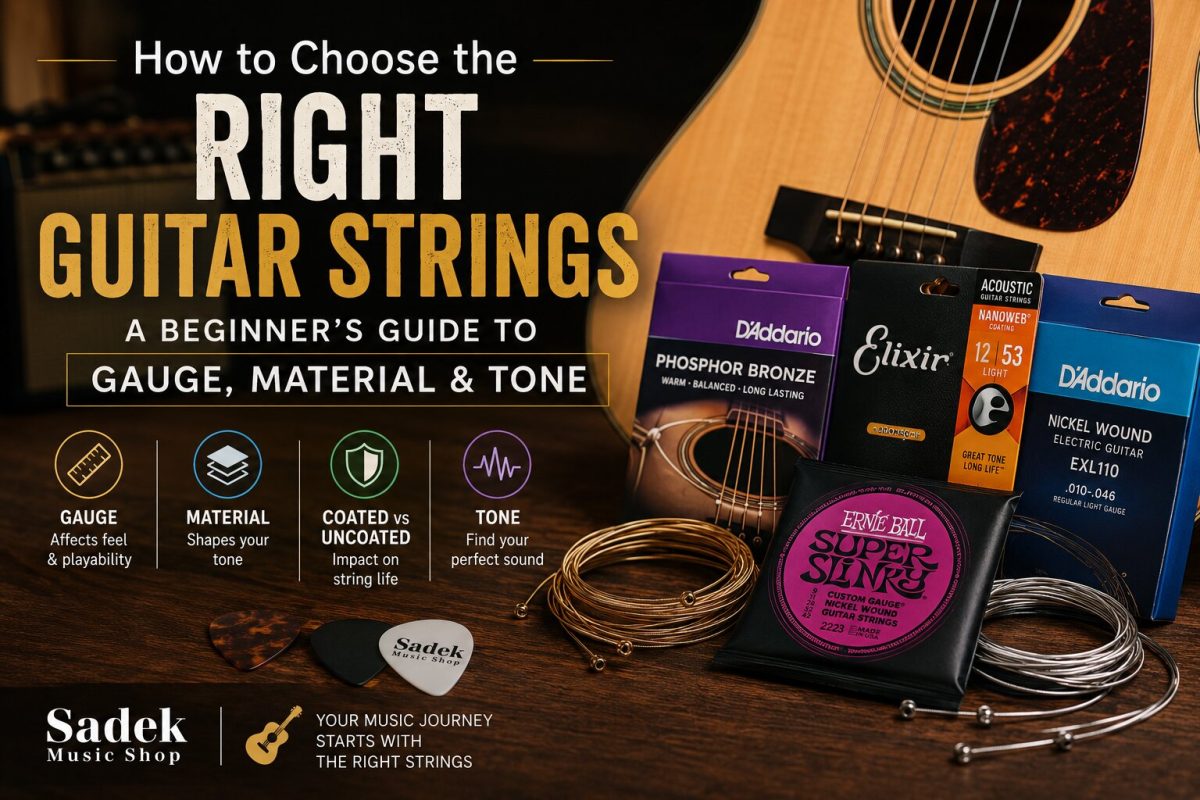
Changing guitar strings sounds like a simple job. Take the old ones off, put the new ones on, tune the guitar and you're done. But once you start shopping for strings, things can get surprisingly confusing.
You'll see numbers such as .010, .011 or .012, descriptions like light, medium and heavy gauge, and materials such as phosphor bronze, 80/20 bronze, nickel and stainless steel. Then there are coated strings, different string types for different guitars, and dozens of brands to choose from.
For someone buying strings for the first time, it's easy to wonder whether any of it really matters.
It does. The strings are one of the few parts of your guitar that you interact with every time you play. They affect how the guitar feels under your fingers, how easily you can bend notes, how bright or warm it sounds and even how long you can comfortably practise.
So how do you know which strings are right for you? Let's start with the part that causes the most confusion.
What Does Guitar String Gauge Mean?
String gauge simply refers to the thickness of the strings.
A set might be described as .009–.042, .010–.046 or .011–.049. The first number refers to the thinnest string, while the last number refers to the thickest.
You will often hear these sets described as:
- Extra light
- Light
- Medium
- Heavy
The exact measurements can vary between brands and guitar types, so it's always worth checking the specifications on the particular set you're buying.
For a beginner, the easiest thing to remember is this:
Thinner strings generally feel easier to press and bend, while thicker strings tend to provide more resistance and can produce a fuller, stronger response. That doesn't mean heavier strings are automatically better.
Should a Beginner Use Light or Heavy Strings?
For most beginners, lighter gauges are a comfortable place to start. Your fingertips need time to get used to pressing strings against the frets. If you immediately choose a very heavy set, playing chords and bending notes can feel unnecessarily difficult.
Lighter strings require less finger pressure, which can make those first few weeks of learning more enjoyable.
There's another benefit too. If the guitar feels comfortable, you're more likely to pick it up and practise.
That sounds obvious, but it's important. When you're learning guitar, small frustrations can quickly become reasons to put the instrument back in its case.
As you become more experienced, you may decide that you prefer thicker strings. Some players like the additional resistance and fuller response, particularly for rhythm playing.
There isn't a gauge that every guitarist should use.
How String Gauge Changes the Way Your Guitar Feels
The difference between gauges becomes much more noticeable when you actually play them.
With a lighter set, bends generally require less effort. Fretting chords can also feel easier, which is useful when you're still developing finger strength and accuracy.
Heavier strings have more tension and can feel firmer under your fingers. Some experienced players prefer this because it gives them a stronger, more controlled feel when playing.
Your playing style matters too.
Someone who spends most of their time gently fingerpicking may prefer a different gauge from a guitarist who plays aggressively with a pick.
And if you're constantly changing tunings, string gauge becomes another consideration because the tension of the strings changes with the tuning.
What Are Guitar Strings Made From?
Once you've figured out the gauge, you'll probably come across another question:
What material should I choose?
This depends largely on whether you're buying strings for an acoustic or electric guitar.
Acoustic Guitar Strings
Phosphor bronze is one of the most popular choices for acoustic guitars. These strings are known for producing a balanced sound with warmth and clarity, making them suitable for a wide range of playing styles.
You'll also see 80/20 bronze strings. These tend to have a brighter, more pronounced character and can work particularly well when you want your acoustic guitar to have plenty of sparkle and projection.
Neither is necessarily better. If you prefer a warm, balanced sound, phosphor bronze may be worth trying. If you like a brighter and more lively acoustic tone, 80/20 bronze could be a better match.
Electric Guitar Strings
Electric guitar strings are commonly made using materials such as nickel or nickel-plated steel.
Nickel-plated steel is particularly popular because it offers a good balance of brightness, warmth and versatility.
Pure nickel strings can have a slightly warmer and smoother character, while stainless steel strings are often chosen by players looking for a brighter response and a different feel under the fingers.
Again, the best choice comes down to the sound you're looking for.
What Are Coated Guitar Strings?
You may also notice strings described as coated. The idea is fairly straightforward. A very thin coating is applied to the strings to help protect them from dirt, sweat and moisture.
This can be useful if your strings tend to lose their freshness quickly or if you play frequently.
Coated strings can also be appealing to players who don't enjoy changing strings often.
Some guitarists love the feel and longevity of coated strings. Others prefer the more traditional feel and initial brightness of uncoated strings.
It's one of those things that's difficult to decide from a product description alone.
If possible, try both at some point and see which you prefer.
How Often Should You Change Your Guitar Strings?
There's no universal schedule. A guitarist who plays for an hour every day will naturally wear strings differently from someone who picks up the guitar once or twice a week.
Over time, strings can lose their brightness and become harder to tune consistently. You may also notice that they feel rougher or look dull and worn.
If your guitar suddenly sounds lifeless even though it's properly tuned, the strings may simply be ready for replacement.
Your hands also make a difference. Sweat and natural oils can affect strings, which is why wiping them down after playing is a simple habit worth developing.
Don't Forget the Guitar Itself
One mistake beginner sometimes make is buying strings based only on the sound they want. The guitar matters too.
A set designed for an acoustic guitar should not be put on an electric guitar, and nylon-string classical guitars require completely different strings from steel-string acoustics.
It's also worth checking the gauge your guitar is designed or set up for before making a major change. If you normally use light strings and suddenly move to a much heavier gauge, the increased tension can affect the guitar's setup and playing feel.
If you're unsure, ask a guitar specialist before changing gauges.
What About Playing in the UAE?
For guitarists in the UAE, string care is worth paying attention to.
The combination of heat, humidity and frequent movement between air-conditioned rooms and outdoor conditions can be hard on musical instruments. Strings are particularly exposed because they're constantly in contact with your hands.
That doesn't mean you need to worry every time you take your guitar outside. Simple habits help.
Keep your guitar in a suitable case or gig bag when you're not playing, avoid leaving it in a hot car and wipe the strings after playing. If you regularly play in different environments, keeping an eye on how your guitar and strings respond can help you spot problems early.
For more valuable instruments, proper storage and humidity management become even more important.
So, Which Strings Should You Buy?
If you're a beginner and don't know where to start, don't make it more complicated than it needs to be.
For an acoustic guitar, a light-gauge phosphor bronze set is a sensible starting point for many players. It offers a comfortable playing feel and a versatile acoustic tone.
For an electric guitar, a light or regular-light nickel-plated steel set can be a good starting point, particularly if you're still developing your fretting and bending technique.
From there, you can experiment. Try a different gauge. Try a different material. Try coated strings. After you've played for a while, you'll start to notice what you like.
Maybe you'll discover that lighter strings make your playing more comfortable. Maybe you'll prefer the stronger feel of a heavier set. You might even find that you love the brighter sound of one material but prefer the feel of another.
That's part of becoming a guitarist.
Final Thoughts
There is no single set of guitar strings that will make every player happy. The right choice depends on your guitar, your playing style, the sound you prefer and how often you play.
If you're buying strings for the first time, start with something sensible rather than trying to find the "perfect" set straight away. Once you've spent some time playing, you'll have a much better idea of what you want to change.
At Sadek Music Shop, we've been helping musicians across the UAE choose guitars, strings and accessories since 1979. If you're unsure which strings are suitable for your guitar, our team can help you choose the right gauge and material instead of leaving you to figure it out from a wall of nearly identical-looking packets.
Because sometimes, getting the right sound from your guitar doesn't require a new guitar at all.