

How to Choose the Right Microphone for Your Needs
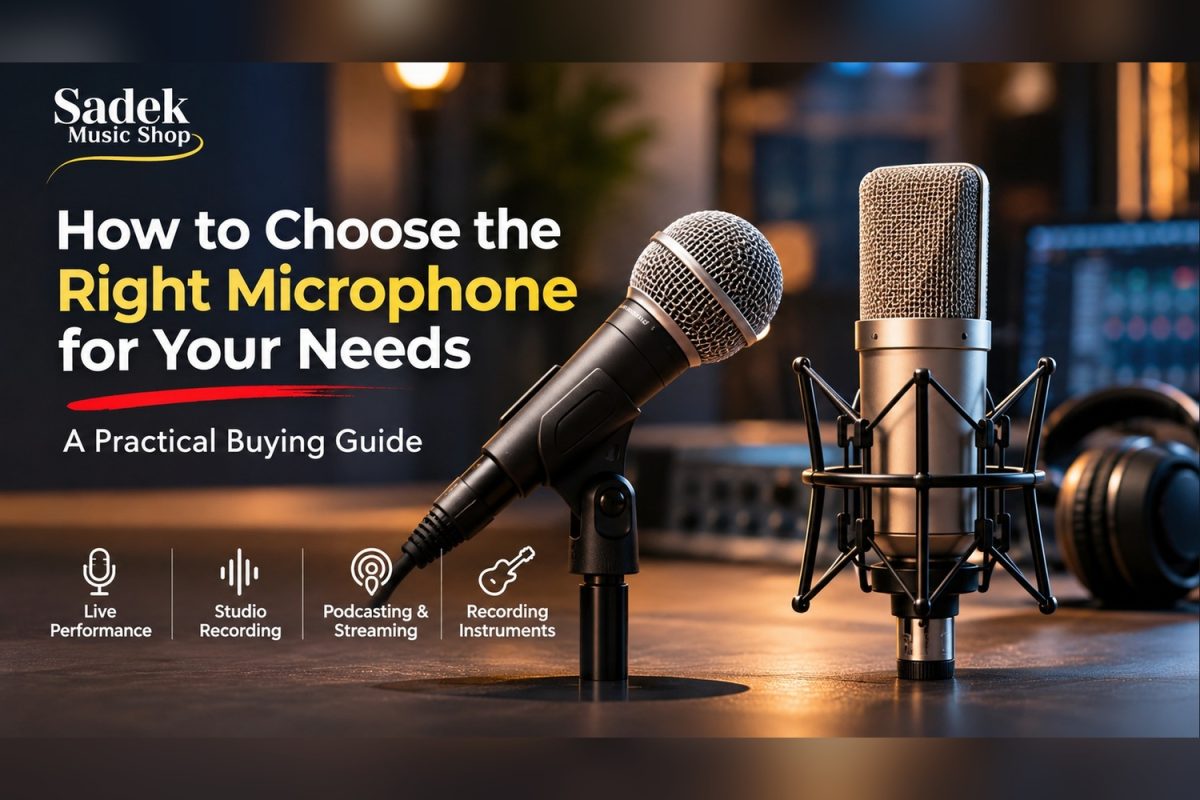
Walk into a music shop looking for a microphone and you'll quickly realise there are more choices than you might expect. Some are designed for singers performing on stage, others are made for studio recording, and then there are microphones specifically suited to podcasting, streaming and recording instruments.
At first glance, many of them may look quite similar. But choosing the wrong type can leave you with a microphone that doesn't quite suit the job.
The easiest way to make a good choice is to start with one simple question: what do you actually want to use it for?
Start With How You'll Use It
A singer performing live has different requirements from someone recording vocals in a bedroom. The same goes for podcasters, musicians and content creators.
If you're singing on stage, a handheld dynamic microphone is usually a sensible choice. It needs to handle loud sound, withstand regular use and work reliably during performances. The Shure SM58 is a familiar example that has been used by performers for decades.
For home studios, condenser microphones are worth exploring. They're commonly used for vocals and acoustic instruments because they capture subtle details in the sound. However, they can also pick up background noise, so your recording space matters.
If you're starting a podcast or recording voiceovers, you don't necessarily need a complicated studio setup. A good dynamic microphone can work very well in an ordinary room, particularly if there is some background noise.
Recording instruments is a different consideration altogether. The microphone you'd use for an acoustic guitar isn't necessarily the one you'd choose for a drum kit or guitar amplifier.
Dynamic or Condenser: Which One Makes More Sense?
This is probably the first technical question you'll come across when comparing microphones.
Dynamic microphones are generally robust and versatile. They're widely used for live vocals, rehearsals, drums and guitar amplifiers. They're also a practical option for spoken-word recording when your room isn't acoustically treated.
Condenser microphones are popular in recording studios because they can capture a detailed and responsive sound. They're often used for vocals, acoustic guitar, piano and other instruments where subtle details matter.
Most studio condenser microphones require 48V phantom power, which is supplied by a compatible audio interface or mixer.
Neither type is automatically better. A condenser microphone isn't necessarily an upgrade from a dynamic one. It simply does a different job, and the right choice depends on where and how you plan to use it.
Pay Attention to the Pickup Pattern
Another detail worth checking is the microphone's pickup pattern. This describes the direction from which it captures sound.
For example, a cardioid microphone mainly picks up sound from the front. This makes it a popular choice for singers, podcasters and people recording their own voice.
An omnidirectional microphone captures sound from all directions. It can be useful for group conversations or recording the atmosphere of a room.
Supercardioid microphones have a narrower pickup area at the front and are sometimes preferred in live performance situations where better separation from surrounding sounds is needed.
If you're buying your first microphone, cardioid is often a good place to start.
USB or XLR: Check How It Connects
This is something worth checking before you buy, particularly if you already have recording equipment.
USB microphones connect directly to a computer. They're convenient for podcasting, streaming, online presentations and basic home recording. You can get started without purchasing a separate audio interface.
XLR microphones connect to a mixer, audio interface or preamp. They're commonly used in professional recording and live sound setups.
If you only need to record your voice on a computer, USB may be all you need. But if you plan to record instruments, connect multiple microphones or build a more flexible studio, an XLR setup is worth considering.
Your Room Can Make a Bigger Difference Than You Think
Here's something that often gets overlooked when buying a microphone: the room you're recording in.
A good microphone will still pick up unwanted sounds if you're recording beside a noisy air conditioner, computer fan or open window. Rooms with bare walls and tiled floors can also create echo and reflections that make recordings sound less clear.
Before spending more money on a microphone, take a look at your recording space. Even simple changes, such as recording in a quieter room, adding curtains or rugs and positioning the microphone correctly, can help.
You may also need a microphone stand, cable, pop filter or audio interface, depending on the type of microphone you choose.
A Few Things to Check Before Buying
Before making your decision, think about the equipment you already own and what you'll need alongside the microphone.
Check whether it requires phantom power, whether the connection is compatible with your computer or mixer, and whether you'll need additional accessories. It's also worth considering whether your recording needs might change in the future.
There's little point paying for a complicated setup if you only need a microphone for occasional voice recordings. Equally, buying something too basic may become limiting if you plan to expand your studio later.
Finding a Microphone That Suits You
The best microphone isn't necessarily the most expensive or the one with the longest list of specifications. A live singer, home-studio musician and podcaster can all need completely different things from their equipment.
At Sadek Music Shop, you can explore microphones and recording equipment from established brands for different applications, whether you're preparing for a live performance, recording music at home or starting a podcast.
Take a little time to understand your requirements before choosing. When a microphone suits your voice, your environment and the way you work, you'll notice the difference every time you use it.